
Behind every CT scan is a skilled technologist who knows how to turn advanced imaging technology into answers that matter. From helping diagnose injuries to identifying serious medical conditions, CT technologists play an essential role in patient care. And with opportunities across hospitals, imaging centers, and travel healthcare, there are plenty of ways to build a career in this specialty.
Whether you’re considering a move into computed tomography or looking to take your CT tech career further, understanding the opportunities ahead can help you make your next move with confidence. Here’s what you need to know about CT technologist responsibilities, certifications, salary, skills, and career outlook
What Is a CT Technologist?
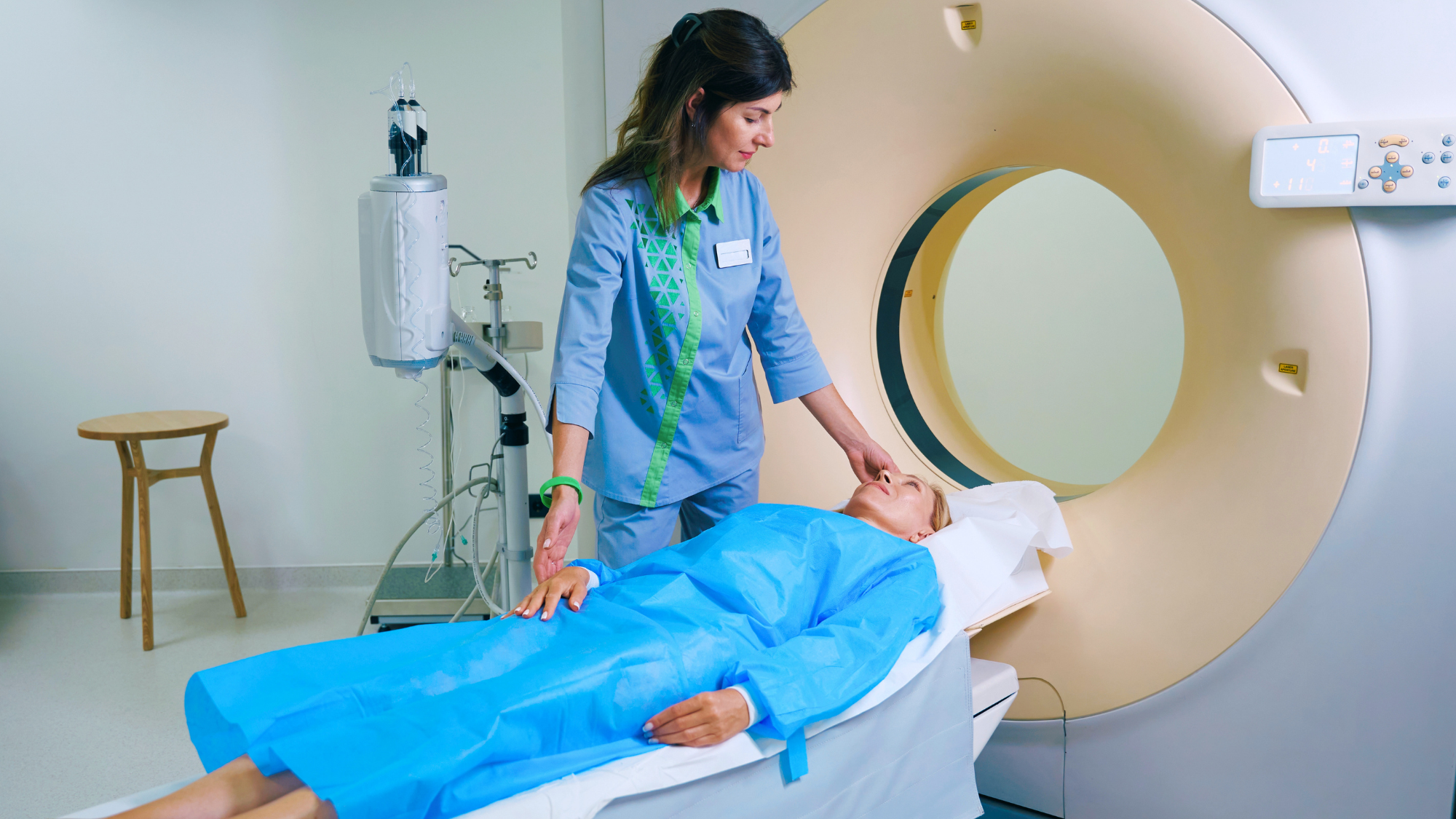
A CT technologist, also called a computed tomography technologist or CT tech, operates CT scanners to capture cross-sectional images of bones, organs, and tissues. Physicians use these images to diagnose conditions ranging from fractures and tumors to internal bleeding.
According to the American Registry of Radiologic Technologists (ARRT), CT technologists typically work in hospitals or imaging centers, scanning different parts of the body for both scheduled diagnostic exams and emergencies. You balance image quality with radiation dose while helping patients feel comfortable throughout the procedure.
What Does a CT Technologist Do?
A CT technologist’s day centers on imaging, but the role involves more than operating a scanner.
Core responsibilities include:
- Preparing patients: Reviewing medical history, explaining the procedure, and positioning patients correctly for the scan.
- Administering contrast: Some CT exams require oral or IV contrast to improve image clarity, and you’ll monitor patients for reactions when administering contrast within your authorized scope of practice.
- Operating CT equipment: Adjusting scan parameters and settings to capture clear images while minimizing radiation exposure.
- Evaluating images: Working with radiologists to confirm image quality and determine whether additional imaging is needed.
- Maintaining equipment: Following quality control and safety protocols to keep scanners functioning properly.
- Documenting patient records: Keeping accurate records of exams, radiation dose, and any complications.
How Do You Become a CT Technologist?
Becoming a CT technologist typically involves earning credentials in an eligible imaging discipline before completing additional CT training and certification.
The general pathway includes:
- Complete an approved imaging education program. Many CT technologists begin in radiography, although nuclear medicine technology and radiation therapy are also eligible pathways.
- Earn an initial imaging credential. Obtain certification and registration in a supporting discipline recognized by ARRT.
- Complete CT-specific training. Fulfill ARRT’s structured education and documented clinical experience requirements.
- Earn CT certification. Pass the ARRT computed tomography examination to earn the R.T.(CT) credential.
- Meet state requirements. Obtain any required state licensure and maintain applicable certifications.
The ARRT’s computed tomography certification resources provide additional information about eligibility, training, and examination requirements.
What Certifications Do CT Technologists Need?
CT technologists may need several credentials depending on their experience, state regulations, and employer requirements. The ARRT’s postprimary CT certification is a widely recognized credential for professionals specializing in computed tomography.
| Credential or requirement | Typical requirement |
| Supporting imaging credential | ARRT certification and registration in Radiography, Nuclear Medicine Technology, or Radiation Therapy. Qualifying NMTCB credentials are also accepted. |
| CT structured education | Required for ARRT postprimary CT certification |
| Documented CT clinical experience | Required for ARRT postprimary CT certification |
| ARRT CT certification, R.T.(CT) | Earned after meeting eligibility requirements and passing the CT examination |
| Basic Life Support (BLS) | Commonly required by employers |
| State licensure | Required in applicable states; requirements vary |
| Advanced Cardiovascular Life Support (ACLS) | May be required for certain positions or facilities |
Certification and licensing requirements can change, so confirm the latest information directly with ARRT and the appropriate state licensing board before applying.
What Skills Does a CT Technologist Need?
CT technology rewards professionals who are technically precise, detail-oriented, and steady under pressure.
Key skills include:
- Technical proficiency: You need to operate complex imaging equipment accurately and adjust settings in real time.
- Attention to detail: A small positioning error can compromise an entire scan.
- Patient communication: You explain procedures clearly and help anxious or injured patients remain comfortable during the exam.
- Physical stamina: The BLS notes that radiologic technologists are often on their feet for long periods and may need to lift or turn patients.
- Critical thinking: You’re evaluating image quality and determining whether additional imaging may be needed.
- Radiation safety awareness: You balance diagnostic image quality with minimizing radiation exposure for patients and yourself.
These skills continue to develop through hands-on experience in different imaging situations.
Where Do CT Technologists Work?
Most CT technologists work in hospital-based imaging departments, though the role appears across several care settings.
According to the BLS, radiologic technologists and technicians are employed primarily in:
- Hospitals, which employ about 60% of the workforce
- Offices of physicians
- Medical and diagnostic laboratories
- Outpatient care centers
- Federal government facilities
Because imaging is often needed for emergencies, CT technologists may work evenings, weekends, and overnight shifts in addition to standard hours. They also use radiation-monitoring badges and follow established radiation-protection protocols.
How Much Do CT Technologists Make?
CT technologist salaries vary based on location, experience, employer, and certifications. According to ZipRecruiter, the average CT technologist salary in the United States is approximately $118,674 annually, or $57.05 per hour.
For travel CT techs, compensation may also include housing and meal stipends, reimbursements, and other benefits depending on the assignment. Average travel CT tech pay with stipends is $2,603. Comparing the full pay package can help you find opportunities that align with your financial and career goals.
What Is the Job Outlook for CT Technologists?
The job outlook for CT technologists is positive. According to the BLS, employment for radiologic and MRI technologists is projected to grow 5% between 2025 and 2035, faster than the average for all occupations.
An aging population, increasing rates of chronic disease, and the continued need for diagnostic imaging are expected to support demand for skilled CT technologists in hospitals, imaging centers, and other healthcare settings.

How Do You Become a Travel CT Tech?
Assignments for travel CT techs commonly run around 13 weeks and are arranged through healthcare staffing agencies. Most facilities prefer candidates with one to two years of recent, hands-on CT experience, although requirements vary by employer and assignment.
On assignment, you’ll generally be expected to adapt quickly to new imaging departments, equipment, and workflows. State licensing requirements also vary, so it’s important to confirm what’s needed before accepting a contract. Pay packages differ by assignment and may include stipends and reimbursements in addition to hourly wages.
If you have solid CT experience and want more flexibility, travel work can be a natural next step. With travel CT tech jobs available across the country, you can explore new facilities, work with different teams, and build on your imaging experience.
Build Your CT Technologist Career Your Way
CT technology puts you at the center of diagnostic imaging, where your precision helps physicians make informed decisions about patient care. Whether you’re pursuing your R.T.(CT) credential, searching for your next CT role, or ready to take your skills on the road, you don’t have to figure it out alone.
Medical Solutions connects you with CT tech jobs nationwide, backed by dedicated recruiters and support throughout your assignment. Whether you’re looking for flexibility, a new location, or your next career opportunity, we’re here to help you find a role that fits.
Ready to find a role that fits your life? Sign up with Medical Solutions and explore what’s next.
Frequently Asked Questions
What’s the difference between a CT technologist and a radiologic technologist?
Radiologic technologists perform diagnostic imaging, including X-rays, and may pursue additional specializations. A CT technologist specializes in computed tomography, using advanced imaging equipment to create detailed cross-sectional images. ARRT CT certification requires additional structured education, clinical experience, and an examination.
How long are travel CT tech contracts?
Travel CT tech contracts commonly run around 13 weeks, though length and terms vary by facility and staffing agency. Some assignments may offer extensions depending on staffing needs and performance.
Can you become a CT tech without being an X-ray tech?
Yes. While many CT technologists start their careers in radiography, you can also pursue CT certification through eligible nuclear medicine technology or radiation therapy credentials. The American Registry of Radiologic Technologists (ARRT) outlines the education, clinical experience, and certification requirements for each eligible pathway