ICU nursing puts you at the center of some of the most complex situations in healthcare. For nurses who enjoy critical thinking, advanced technology, and teamwork, the intensive care unit can offer a challenging and rewarding career path.
This ICU nursing guide covers responsibilities, education, certifications, salary, career outlook, essential skills, and ICU travel nurse opportunities.
What Is an ICU Nurse?
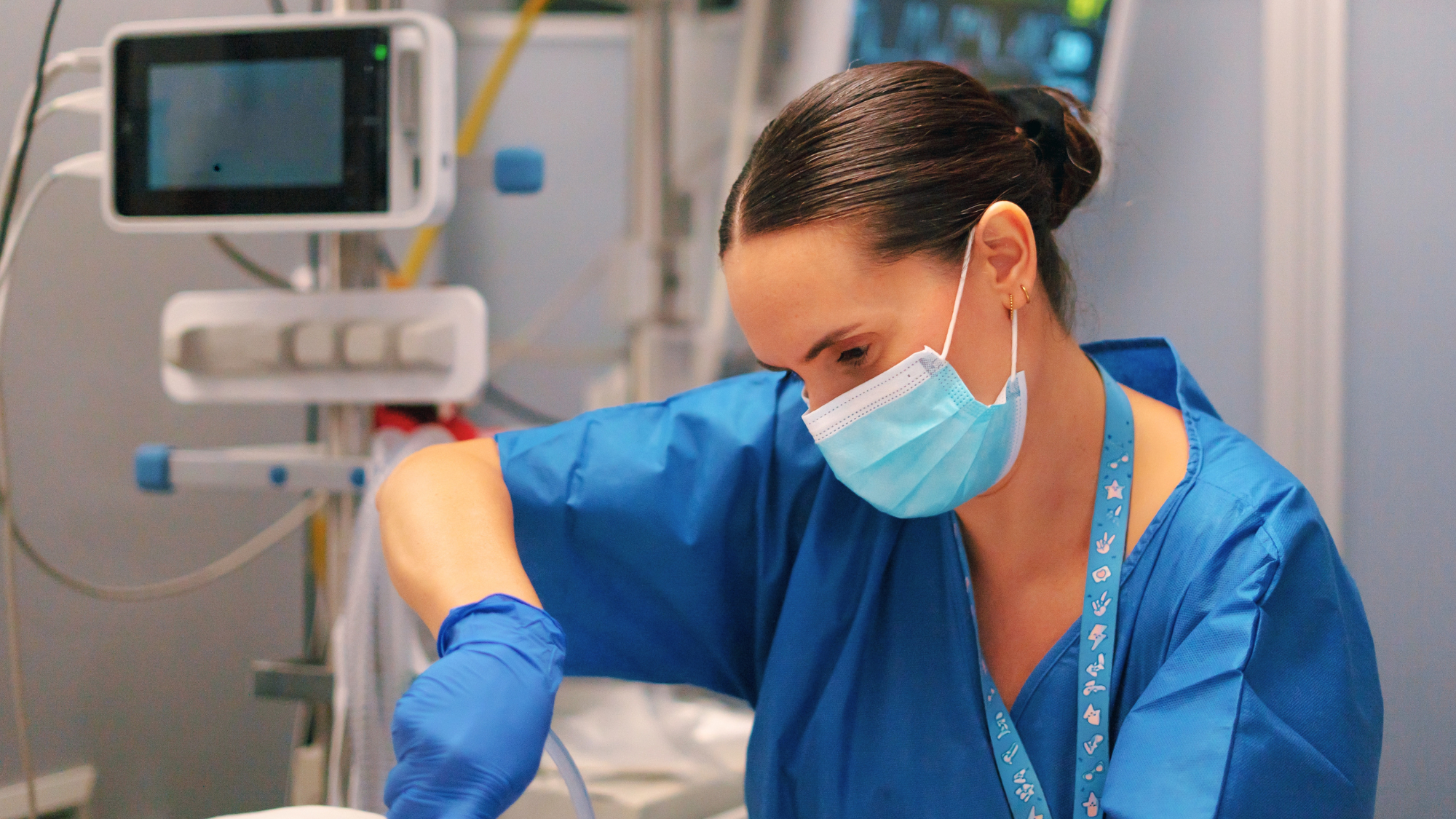
An Intensive Care Unit (ICU) nurse is a registered nurse who provides specialized care to critically ill or injured patients who require close monitoring and complex treatment. Because patient conditions can change quickly, ICU nurses rely on constant assessment, clinical judgment, and communication.
ICU nurses may work in:
- Medical ICU (MICU)
- Surgical ICU (SICU)
- Cardiovascular ICU (CVICU)
- Neurological ICU
- Trauma ICU
- Pediatric ICU (PICU)
- Neonatal ICU (NICU)
What Does an ICU Nurse Do?
ICU nurses assess critically ill patients, administer medications and treatments, manage specialized equipment, respond to changes in condition, and coordinate care with the healthcare team.
Common responsibilities include:
- Monitoring vital signs and patient status
- Performing detailed assessments
- Administering and titrating medications
- Managing IV and central lines
- Caring for ventilated patients
- Monitoring hemodynamic data
- Responding to emergencies
- Assisting with bedside procedures
- Documenting clinical changes
- Communicating with clinicians, patients, and families
What Is the ICU Work Environment Like?
ICUs are high-acuity hospital environments where patients need continuous monitoring and intensive treatment. The work can be fast-paced and unpredictable, with nurses managing complex equipment, medications, and rapidly changing patient needs.
ICU nurses may work days, nights, weekends, and holidays. They also collaborate closely with physicians, respiratory therapists, pharmacists, advanced practice providers, and other specialists.
ICU vs. Med-Surg Nursing: What’s the Difference?
The main difference between ICU and med surg nursing is patient acuity. ICU nurses usually care for fewer patients who need intensive monitoring, while med surg nurses generally manage larger assignments with a broader range of acute medical or surgical needs.
| ICU Nursing | Med Surg Nursing |
| Critically ill or unstable patients | Acute but generally more stable patients |
| Continuous monitoring is common | Monitoring needs vary |
| Smaller patient assignments | Typically larger assignments |
| Frequent use of advanced equipment | Broader general medical and surgical care |
| Rapid changes are common | Care may be more predictable |
The better fit depends on your strengths, interests, and preferred work environment.
How Do You Become an ICU Nurse?
To become an ICU nurse, you must first become a licensed registered nurse and then develop the clinical skills needed to care for critically ill patients.
A typical path includes:
- Earn a nursing degree. Complete an approved ADN, BSN, or nursing diploma program.
- Pass the NCLEX-RN. Meet your state’s requirements for RN licensure.
- Apply for ICU roles or training programs. Some hospitals hire new graduates into ICU residencies, while others prefer acute-care experience.
- Complete required training. BLS and ACLS are commonly required depending on the unit.
- Build critical care experience. Strengthen skills in assessment, emergency response, medications, and advanced monitoring.
- Consider specialty certification. Experienced critical care nurses may pursue CCRN certification.
Requirements vary by employer, so review individual job qualifications.
What Certifications Do ICU Nurses Need?
ICU nurses need an active RN license, while other certifications depend on the hospital, unit, and patient population. BLS and ACLS are common requirements, while CCRN is a voluntary specialty certification that may be preferred for some roles.
| Credential | Typical Requirement |
| RN License | Required |
| Basic Life Support (BLS) | Commonly required |
| Advanced Cardiovascular Life Support (ACLS) | Commonly required in adult ICUs |
| Critical Care Registered Nurse (CCRN) Certification | Optional, but may be preferred |
Additional certifications may be needed in pediatric, neonatal, trauma, or cardiac critical care settings.
What Skills Does an ICU Nurse Need?
Successful ICU nurses combine clinical knowledge with critical thinking, communication, adaptability, and attention to detail.
Important ICU nursing skills include:
- Critical thinking and clinical judgment
- Advanced assessment skills
- Emergency response
- Medication management
- Organization and prioritization
- Teamwork and communication
- Adaptability
- Emotional resilience
- Comfort with complex medical technology
These skills continue to develop throughout an ICU nursing career.
How Much Do ICU Nurses Make?
The average yearly salary for an ICU nurse is $85,205. However, ICU nursing pay can range from $32,000 to $160,000 depending on location, experience, employer, and current staffing demand. ICU travel nurse compensation may include taxable wages and eligible stipends or reimbursements depending on the assignment.

What Career Paths Can ICU Nurses Pursue?
ICU experience can create opportunities for specialization and advancement, including:
- Charge nurse
- ICU nurse educator
- Clinical nurse specialist
- Nurse manager
- Rapid response nurse
- Critical care transport or flight nurse
- Advanced practice nursing
- ICU travel nursing
Nurses can also specialize further in cardiac, trauma, surgical, neurological, pediatric, or neonatal critical care.
What Is an ICU Travel Nurse?
An ICU travel nurse is an experienced critical care RN who takes temporary assignments at hospitals that need additional ICU staffing. These roles allow nurses to work in different facilities and locations while expanding their clinical experience.
Because travelers typically receive shorter orientations than permanent staff, facilities generally expect strong recent ICU experience. Many ICU travel nurse jobs prefer around two years of recent in-hospital experience, although requirements vary.
For experienced ICU nurses who want flexibility, new destinations, or exposure to different hospital systems, travel nursing can be a natural next step.
Build Your ICU Nursing Career with Medical Solutions
An ICU nursing career can take you from the bedside to specialized critical care roles, leadership opportunities, and travel assignments across the country. Wherever you want your experience to take you, having the right healthcare career partner can make finding that next opportunity easier.
Medical Solutions connects nurses with travel and other healthcare opportunities backed by recruiter support and resources throughout the job search and assignment process. Browse ICU travel, perm, local, and PRN nurse jobs or sign up to connect with a recruiter and find an opportunity that fits your experience, goals, and next adventure.
Frequently Asked Questions
Can New Graduate Nurses Work in the ICU?
Yes. Some hospitals hire new graduates into ICU residency or extended orientation programs, while others prefer previous acute-care experience.
What Is the Difference Between an ICU, CCU, and PCU?
An ICU cares for critically ill patients. A CCU often focuses on serious cardiac conditions, while a PCU generally cares for patients who need more monitoring than a standard hospital floor but less intensive treatment than an ICU.
Is Critical Care Nursing the Same as ICU Nursing?
The terms are often used interchangeably, but critical care nursing can also include settings such as cardiac care, trauma, or critical care transport.